The "UNEC Journals Portal" is the official academic publishing platform of Azerbaijan State University of Economics (UNEC), bringing together all UNEC scholarly journals within a unified digital environment.
The portal provides open access to peer-reviewed journals across various disciplines and supports international academic communication. Built on the Open Journal Systems (OJS) platform, it ensures transparency, ethical publishing practices, and adherence to global academic standards.
All journals hosted on the portal operate under internationally recognized editorial policies, double-blind peer review procedures, and academic integrity principles.
The primary objectives of the UNEC Journals Portal are to promote the dissemination of high-quality research, strengthen academic collaboration, increase international visibility of scholarly work and provide a reliable and professional publishing environment for researchers.
Through this platform, users can access all UNEC journals, explore archives, submit manuscripts, and stay informed about the latest scientific publications.
Journals
-
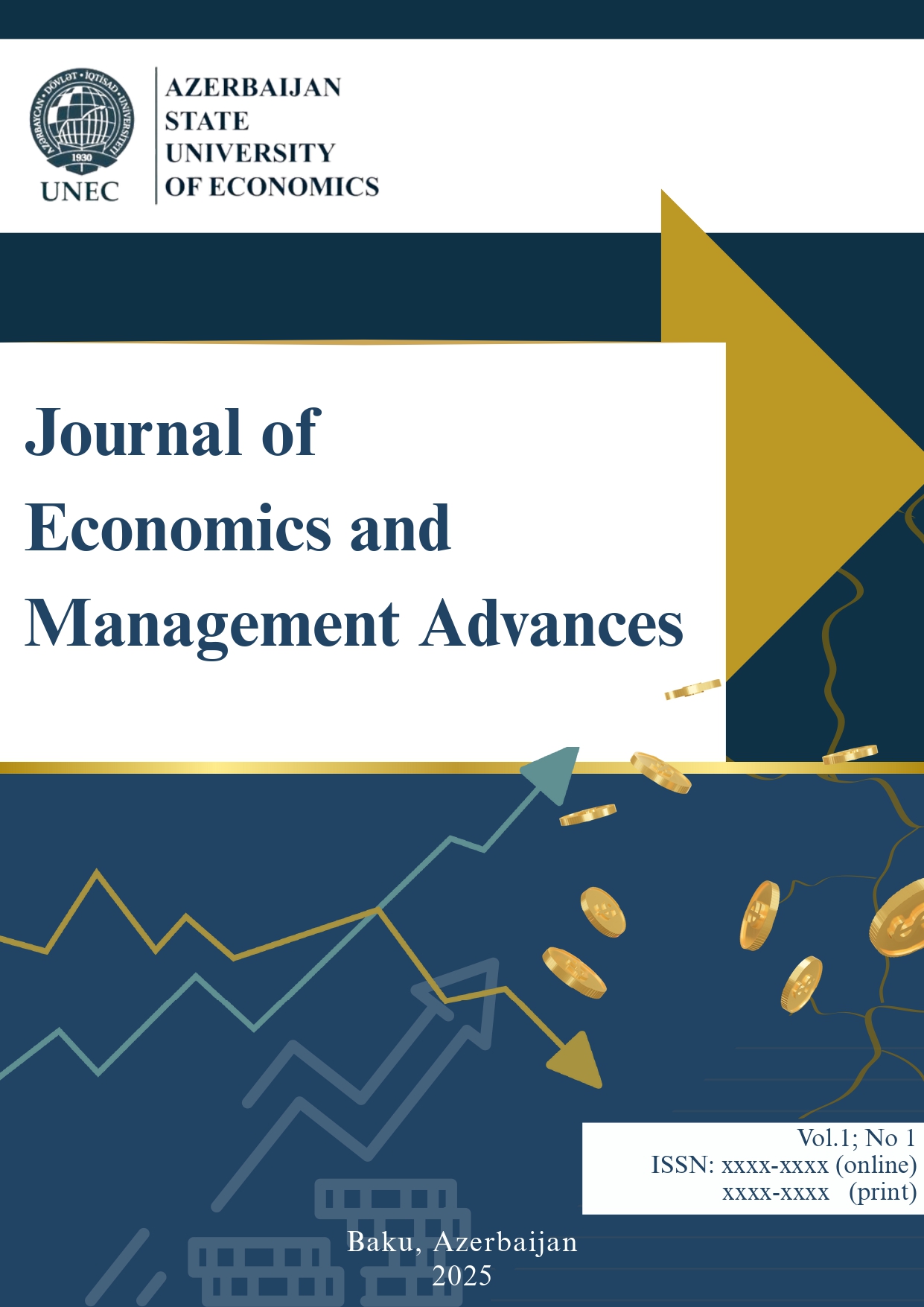
Journal of Economics and Management Advances
Journal of Economics and Management Advances (JEMA) is a peer-reviewed academic journal dedicated to the dissemination of high-quality research in the fields of economics and management. The journal publishes original research articles, review papers, and case studies that contribute to theoretical advancement and practical solutions in both disciplines.
JEMA provides an international platform for scholars, researchers, and practitioners to exchange innovative ideas, empirical insights, and policy-relevant findings. The journal welcomes contributions that adopt interdisciplinary approaches and that address contemporary challenges in economics and business management.
Committed to academic excellence, JEMA upholds a rigorous peer-review process and ethical publishing standards. The journal serves as a valuable resource for academics, policymakers, and industry professionals seeking to stay informed about the latest trends and research developments in the fields of economics and management.
-
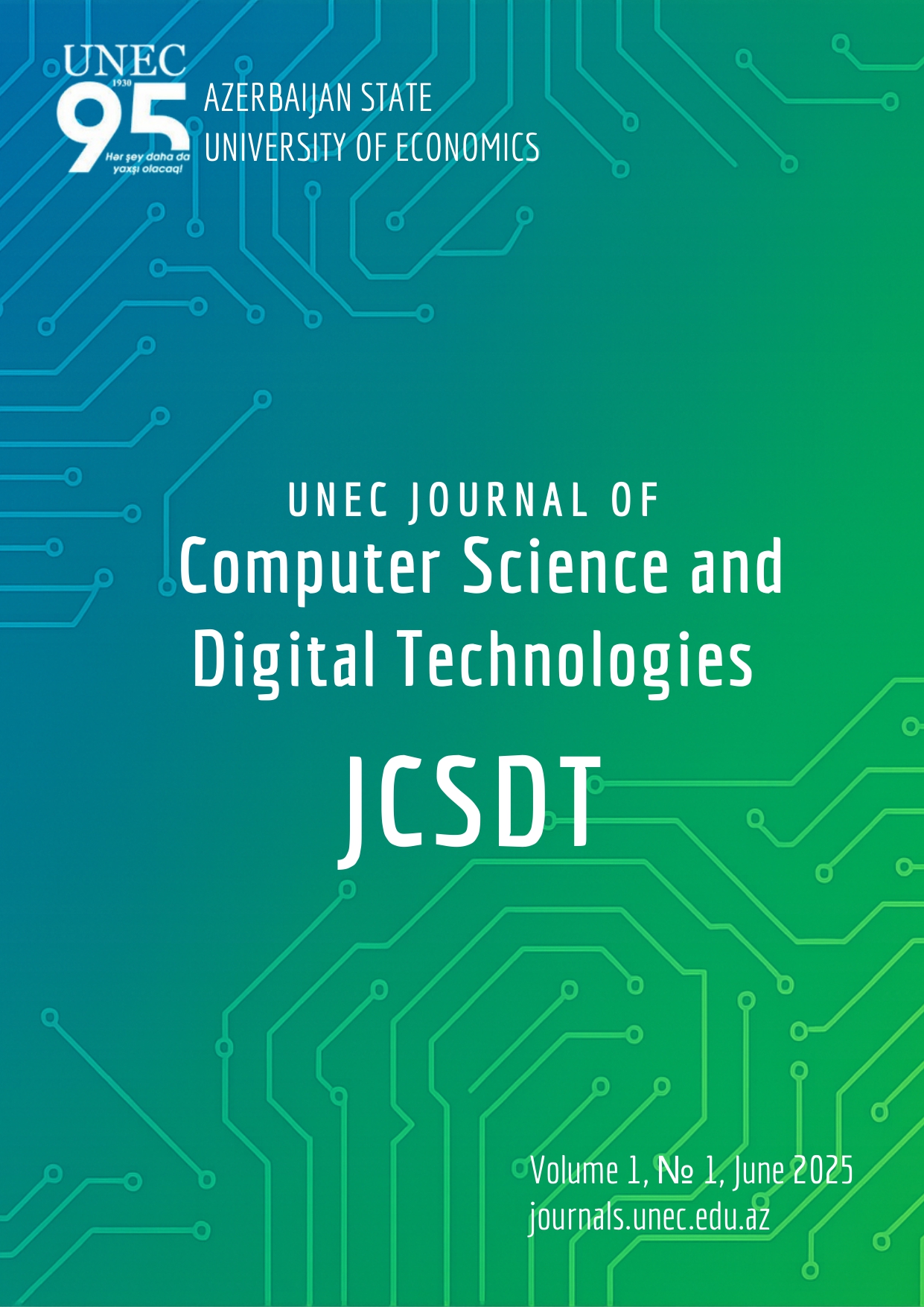
Journal of Computer Science and Digital Technologies
The UNEC Journal of Computer Science and Digital Technologies (JCSDT) is a biannual, peer-reviewed, open-access publication launched by Azerbaijan State University of Economics (UNEC). JCSDT’s primary goal is to advance both theoretical foundations and practical applications in the rapidly evolving fields of computer science and digital technologies. It provides a global platform for researchers, practitioners, and policymakers to disseminate high-quality original research articles, comprehensive reviews, case studies, and short communications.
-
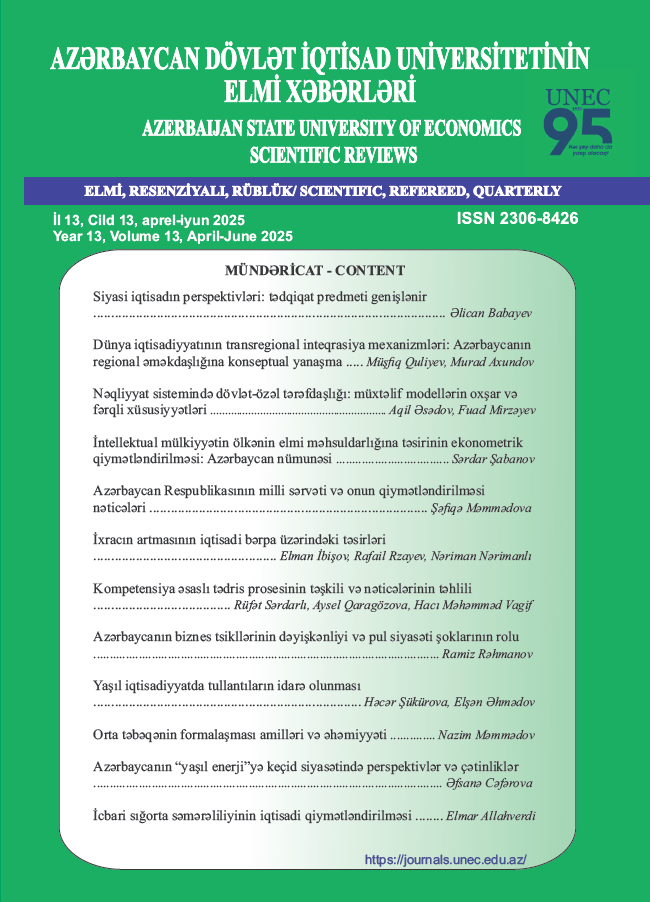
SCIENTIFIC REVIEWS OF THE AZERBAIJAN STATE UNIVERSITY OF ECONOMICS
Scientific Reviews of the Azerbaijan State University of Economics (UNEC) is a peer-reviewed academic journal serving researchers, doctoral candidates, and professionals in economics and related social sciences. Published quarterly in Azerbaijani, English, and Russian, it covers economics, sociology, and public policy.
The journal is included in the official list of scientific publications recommended by the Higher Attestation Commission of the Republic of Azerbaijan for publishing the main results of dissertations.
-
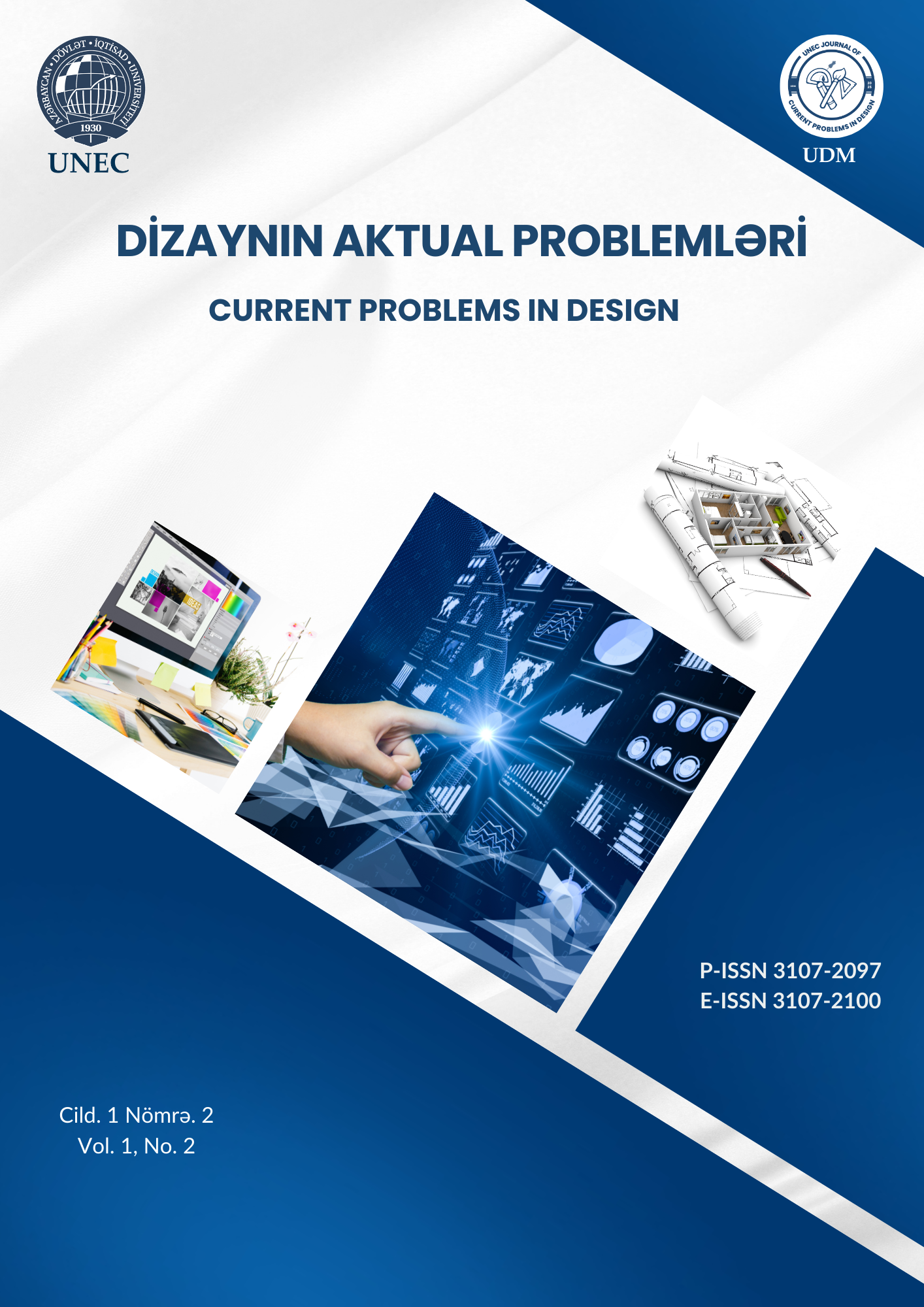
UNEC Journal of Current problems in Design
The special issue of the journal “Current Problems in Design”, published by the Design School of Azerbaijan State University of Economics (UNEC), presents research reflecting the development directions of the creative industries in Azerbaijan and global design trends. The issue addresses pressing topics such as the preservation of national design heritage, digital transformation, and the application of modern technologies.
The journal is published twice a year in Azerbaijani, Russian, and English, and features only peer-reviewed articles. It includes scholarly works by design and applied arts specialists at UNEC, early-career researchers, and members of the international academic community.
Based on UNEC’s rich academic experience, the journal is conceived not only as an academic platform but also as a forum that promotes multidisciplinary collaboration in the field of design and integrates national identity with contemporary approaches. Future plans include indexing the journal in international databases, publishing thematic issues, and organizing conferences to discuss current challenges in the field of design. -
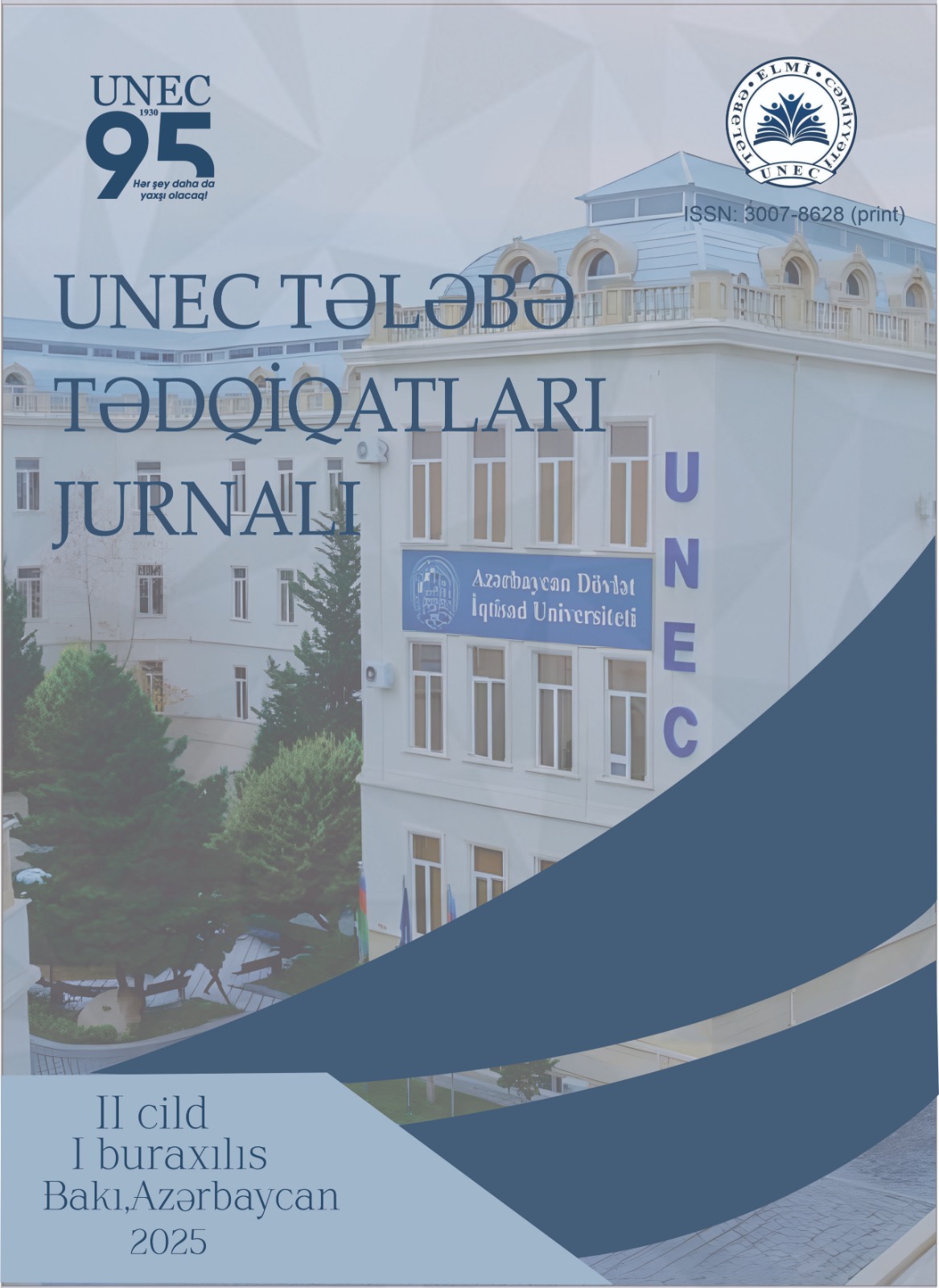
UNEC STUDENT RESEARCH JOURNAL
The UNEC Student Research Journal is a peer-reviewed academic journal published by the Student Scientific Society of the Azerbaijan State University of Economics (UNEC). Established in December 2023, it is the university’s first student-led scholarly journal. The journal aims to reveal the scientific potential of undergraduate and graduate students, support their research and publication activities, and stimulate academic creativity. It publishes original theoretical and empirical research articles in economics, management, technological sciences, and related fields. The journal accepts manuscripts in Azerbaijani, Turkish, English, and Russian, and is published twice a year. All submissions are subject to academic ethics standards and plagiarism screening.
-
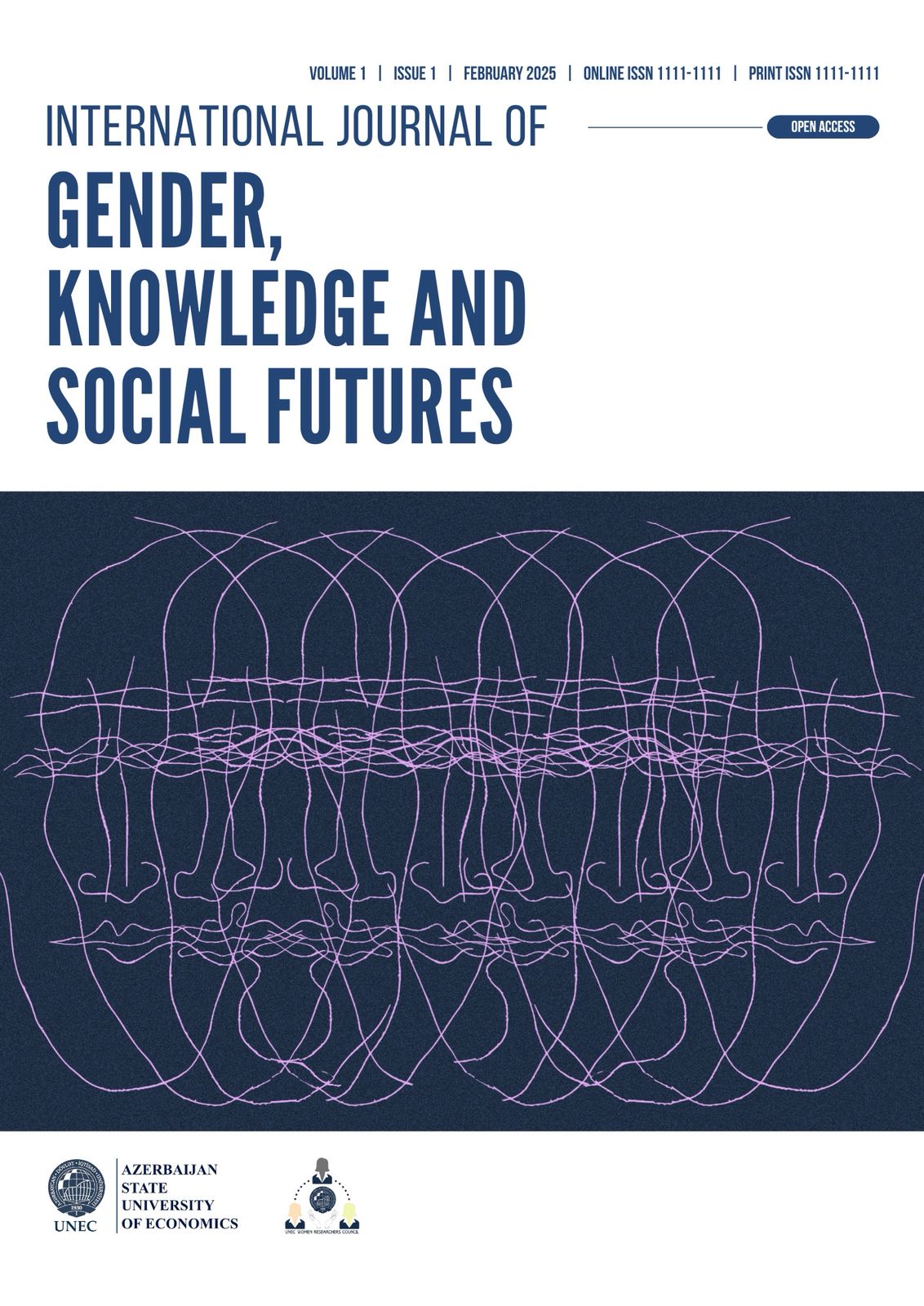
INTERNATIONAL JOURNAL OF GENDER, KNOWLEDGE, AND SOCIAL FUTURES
The International Journal of Gender Knowledge and Social Futures (IJGKSF) is a peer-reviewed, open-access journal dedicated to advancing high-quality interdisciplinary research on gender, social transformation, and inclusive development. Hosted by the Women Researchers Council (WRC) at the Azerbaijan State University of Economics (UNEC), the journal provides a platform for scholars, policymakers, and practitioners to explore how gender shapes institutions, policies, and societies in a rapidly changing world. IJGKSF emphasizes rigorous theoretical frameworks as well as empirical research that offers actionable insights for governance, social interventions, and sustainable development.
The scope of the journal includes the following, but is not necessarily restricted to:
-
Gender and social transformation in political, economic, and social institutions
-
Gender dimensions of knowledge systems, innovation, and inequality
-
Gender perspectives in economics, education, and public policy
-
Social futures, sustainability, and inclusive and equitable development
-
Interdisciplinary and comparative approaches to gender and society
-
Gender-responsive governance, development strategies, and social policy
-
Intersectional analyses of inequality across regions and social groups
IJGKSF welcomes original research articles, review papers, and policy-oriented analyses employing qualitative, quantitative, and mixed-method approaches. All submissions undergo a rigorous double-blind peer review process to ensure academic excellence and relevance to the field of gender studies, social sciences, and interdisciplinary research.
-
-
The Journal of Belt and Road Studies
The Journal of Belt and Road Studies is established as a peer-reviewed scientific journal published twice a year by Azerbaijan State University of Economics (UNEC) dedicated to advancing rigorous, interdisciplinary research on the Belt and Road Initiative (BRI) and its multifaceted implications for global economic, political, and socio-cultural landscapes. As one of the most ambitious and transformative initiatives of the 21st century, the BRI has reshaped international connectivity, trade, and regional cooperation, creating unprecedented opportunities and complex challenges that demand critical scholarly inquiry.
This journal provides a platform for scholars, policymakers, and practitioners to present high-quality empirical research, conceptual analyses, and policy-oriented studies. By fostering evidence-based and methodologically robust scholarship, it seeks to illuminate the BRI’s impact on sustainable development, political economy, governance, international relations, and cross-cultural exchange.
In today’s rapidly evolving global landscape, marked by economic interdependence and geopolitical realignments, comprehensive and critically engaged research on the BRI is essential. As a peer-reviewed scientific journal, the Journal of Belt and Road Studies ensures the highest standards of academic rigor, providing researchers with a credible and influential outlet to disseminate their findings and contribute to the global discourse.
The journal aspires to become a key reference for academics, researchers, and policy experts worldwide, promoting interdisciplinary collaboration, advancing theoretical and applied knowledge, and informing evidence-based policymaking. By encouraging submissions that combine analytical depth, methodological excellence, and intellectual originality, the journal strengthens scholarly understanding of the BRI and its broader significance for global development.
-
South Caucasian Journal of Educational Science and Technology
The South Caucasian Journal of Educational Science and Technology (SCJEST) is a peer-reviewed scholarly journal published by UNEC Azerbaijan State University of Economics. The journal publishes original, quantitatively oriented empirical research that advances scientific understanding in education and educational technology.
SCJEST is committed to high standards of theoretical relevance, methodological rigor, and research transparency. The journal welcomes interdisciplinary contributions from educational sciences, psychology, and the learning sciences, provided that studies are grounded in robust quantitative methodologies.
Aims and Scope
The journal publishes original, quantitatively driven empirical studies characterized by strong theoretical grounding and advanced methodological rigor that make significant scientific contributions and extend current knowledge in education and educational technology. Submissions are welcomed from related disciplines, including educational sciences and measurement, educational psychology, education economics and the learning sciences, STEAM (Science Technology Engineering Art Mathematics) particularly where interdisciplinary approaches are supported by robust quantitative analysis. The journal gives priority to manuscripts originating from the South Caucasian region; however, submissions from other regions are also welcomed, international studies can be published. SCJEST is dedicated exclusively to quantitative methodologies that advance empirical understanding of teaching, learning, assessment, and educational systems through statistical, econometric, psychometric, computational, and experimental approaches.
JEST only considers manuscripts employing quantitative research methods. Submissions must demonstrate:
- Explicit research questions or hypotheses
- Robust statistical or computational analysis
- Transparent data, measurement, and model specification
- Replicability and methodological rigor
Qualitative, mixed-methods, conceptual, narrative, or purely descriptive studies are not considered.
Data and Transparency Expectations
To maintain high scientific standards, authors are expected to:
- Clearly describe data sources and sampling procedures
- Provide full model specifications and assumptions
- Report effect sizes and uncertainty measures
- Include a Data Availability Statement
Peer Review Process
SCJEST operates a double-blind peer review process to ensure objectivity, fairness, and academic quality.
All submissions undergo an initial editorial screening for scope, originality, ethical compliance, and methodological adequacy. Manuscripts meeting the journal’s criteria are reviewed by at least two independent expert reviewers.
Reviewers assess submissions based on:
- theoretical contribution
- appropriateness and rigor of quantitative methods
- data quality and transparency
- validity of results and interpretation
Editorial decisions include Accept, Minor Revision, Major Revision, or Reject. Manuscripts that do not meet the journal’s methodological requirements may be rejected without external review.
Publication Ethics and Research Integrity
SCJEST is committed to maintaining the highest standards of publication ethics and research integrity.
Authors
Authors must submit original work that is not under review elsewhere, accurately report data and methods, properly cite sources, disclose conflicts of interest and funding, and confirm ethical approval and informed consent where applicable.
Editors
Editors make publication decisions based solely on scholarly merit, maintain confidentiality, manage conflicts of interest, and investigate suspected misconduct.
Reviewers
Reviewers are expected to conduct objective and constructive evaluations, maintain confidentiality, and disclose any conflicts of interest.
Plagiarism Policy
All submissions may be screened using plagiarism-detection software prior to peer review.
- Minor textual overlap may require revision.
- Substantial plagiarism, duplication, or self-plagiarism will result in rejection.
- Serious ethical violations may be reported to the authors’ institutions.
The journal does not tolerate plagiarism in any form.
Copyright and Licensing (Non–Open Access)
SCJEST is a subscription-based, non–open-access journal.
- Copyright of published articles is transferred to the publisher, UNEC – Azerbaijan State University of Economics.
- Access to published content is limited to subscribers, institutional users, and authorized indexing and abstracting services.
- Reuse or redistribution of published material requires written permission from the publisher.
Any permitted repository deposit must clearly reference the final published version.
Use of Artificial Intelligence (AI) Tools
The limited use of AI tools is permitted under strict conditions.
- AI tools may be used only for language editing or formatting assistance.
- Any use of AI tools must be disclosed by the authors.
- AI tools cannot be listed as authors.
- Authors remain fully responsible for the accuracy, originality, and integrity of the manuscript.
The use of AI for data fabrication, falsification, or manipulation is strictly prohibited.
Retractions, Corrections, and Expressions of Concern
The journal takes responsibility for maintaining the integrity of the scholarly record.
- Corrections are issued for errors that do not invalidate findings.
- Retractions are issued for serious ethical or scientific misconduct.
- Expressions of Concern may be published while investigations are ongoing.
All notices are permanently linked to the original publication.
Policy Transparency
All journal policies are publicly available on the journal website to ensure transparency for authors, reviewers, readers, and indexing bodies.