
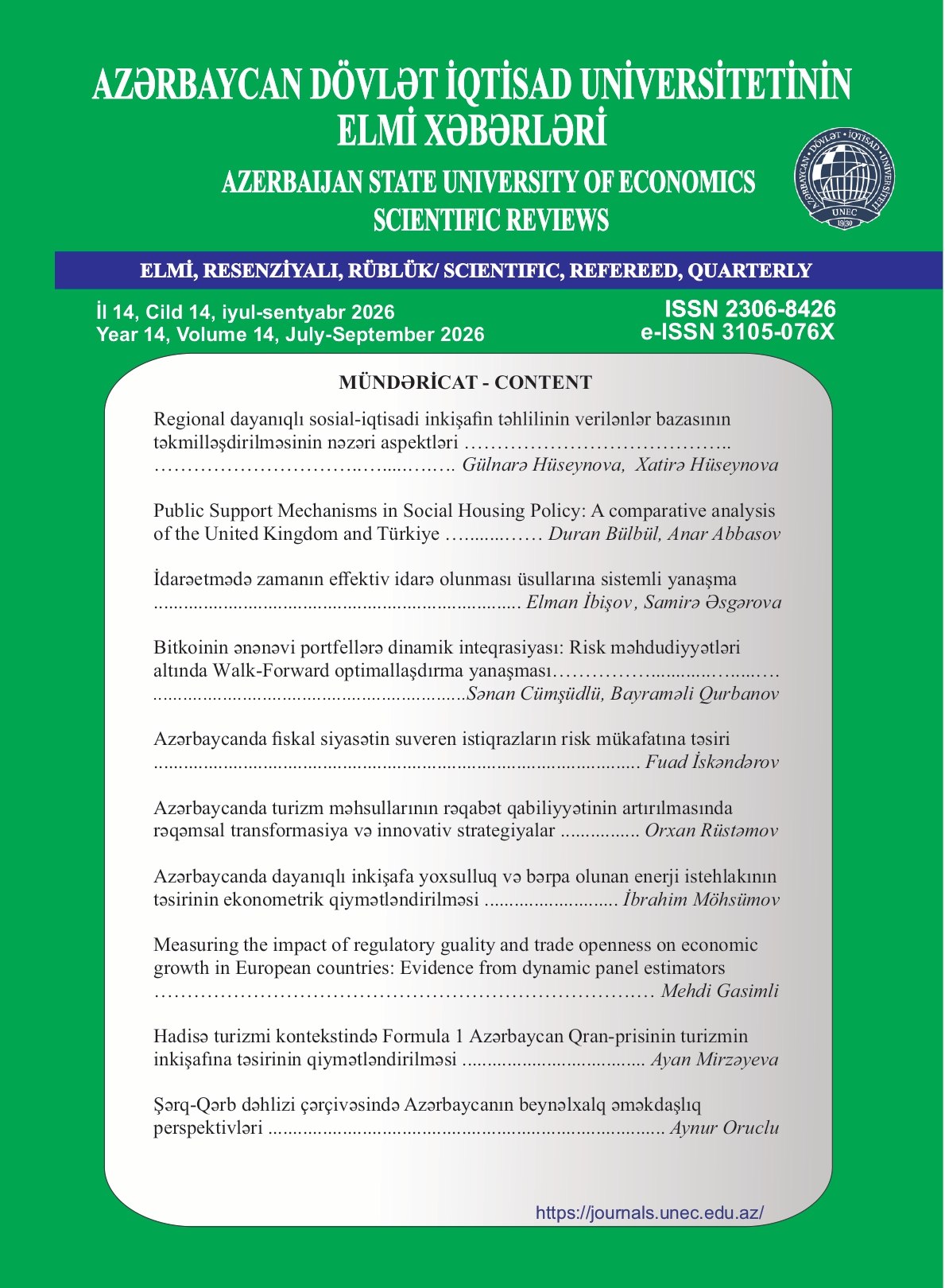
PUBLIC SUPPORTMECHANISMS IN SOCIAL HOUSING POLICY: A COMPARATIVE ANALYSIS OF THE UNITED KINGDOM AND TÜRKİYE
DOI:
https://doi.org/10.30546/UNECSR.2026.03.508Keywords:
social housing; housing policy; Right to Buy; TOKİ; housing affordability.Abstract
Housing affordability remains a key challenge for social welfare, economic stability, and urban living conditions. Rapidly rising costs particularly affect lower-income households, making social housing central to public policy. This study examines public support mechanisms in social housing policy through a comparative analysis of the United Kingdom and Türkiye.
Comparative research shows that national housing systems are embedded within wider institutional arrangements, including labour markets, tax structures, and social security frameworks (Stephens and Hick, 2024). Consequently, increasing overall housing supply alone may not resolve affordability issues without targeted support and clear eligibility criteria.
This paper compares the United Kingdom’s framework—which combines supply-side measures with rental assistance, homeownership support, and localized welfare—with Türkiye’s approach, which focuses mainly on direct public housing production through the Housing Development Administration (TOKİ). Rather than proposing a single optimal model, the study assesses selected policy instruments against institutional capacity, fiscal feasibility, and tenure-structure compatibility to evaluate their potential applicability to Türkiye.
Downloads
Published
Issue
Section
License
Copyright (c) 2026 Duran Bülbül, Anar Abbasov (Author)

This work is licensed under a Creative Commons Attribution 4.0 International License.