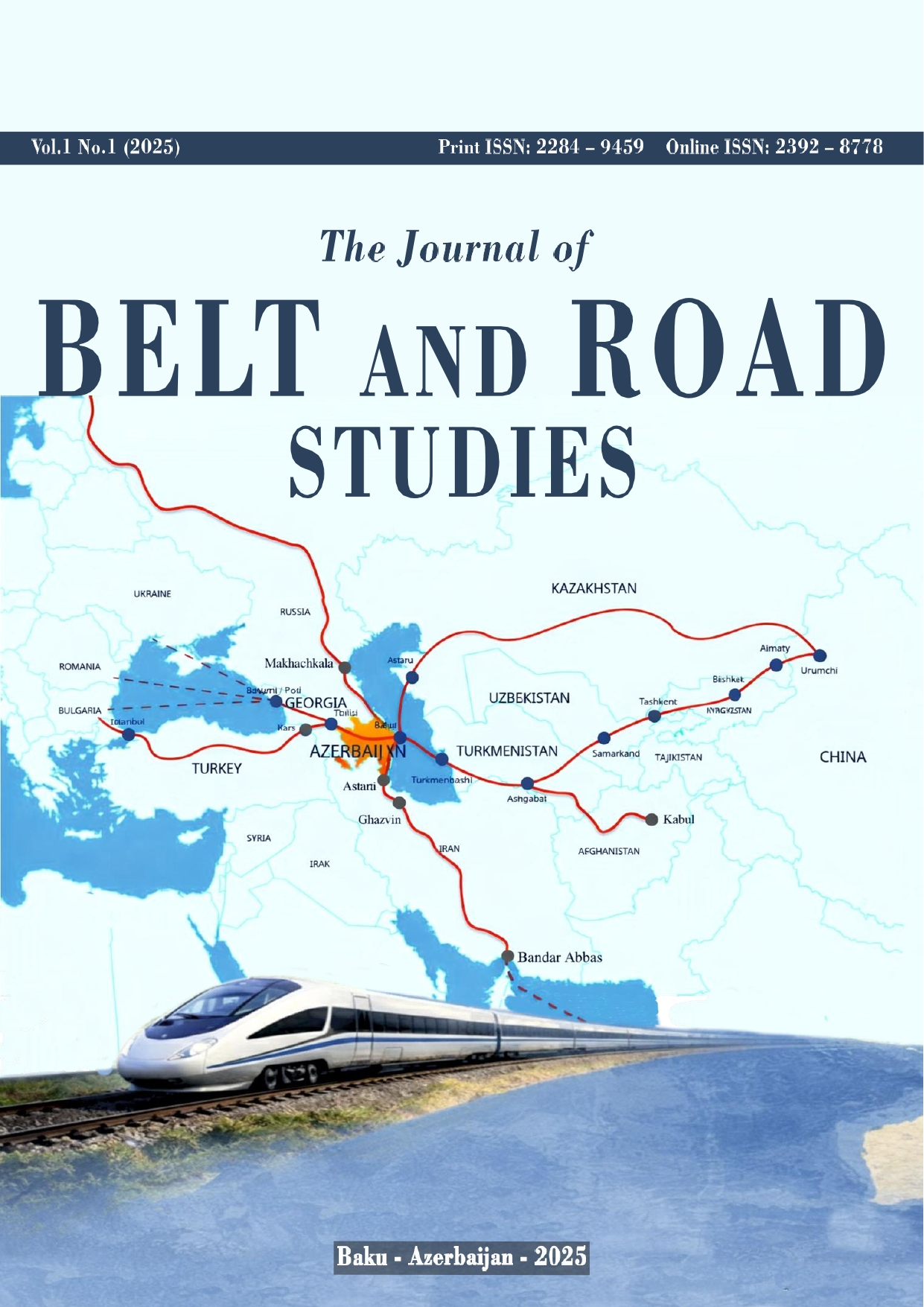
The Financial Viability of The Trans-Caspian International Transport Route (TITR): A Risk-Adjusted Analysis of Infrastructure Synergy and Azerbaijan’s Strategic Role
DOI:
https://doi.org/10.30546/200310.330.01.2026.034Keywords:
Trans-Caspian International Transport Route Middle Corridor Azerbaijan Transport economics Infrastructure finance New Economic GeographyAbstract
The Trans-Caspian International Transport Route (TITR), commonly referred to as the Middle Corridor, has emerged as a strategically significant multimodal freight corridor linking China, Central Asia, the Caspian basin, Azerbaijan, Georgia, Türkiye, and European markets. While its geopolitical relevance has been widely analysed, the financial viability of the corridor remains insufficiently theorised within a risk-adjusted framework. This paper addresses that gap through a qualitative-analytical assessment that integrates New Economic Geography and Transaction Cost Economics perspectives. Drawing on peer-reviewed scholarship, institutional reports, and empirical transport data, the study evaluates TITR’s competitiveness relative to the Northern Corridor and maritime alternatives, with particular emphasis on Azerbaijan’s role as the pivotal logistics node. The analysis demonstrates that TITR’s corridor competitiveness is determined not only by physical distance reduction approximately 3,000 km shorter than the Northern Corridor, but by the institutional quality of soft infrastructure including customs harmonisation, digital cargo tracking, and tariff coordination. The paper further examines how the Port of Alat, the Baku-Tbilisi-Kars (BTK) railway, and the prospective Zangezur Corridor collectively generate infrastructure synergies capable of reducing operating expenditure, improving capital rotation, and lowering the risk premium perceived by logistics operators. The findings suggest that TITR’s long-term financial viability depends on the consolidation of a platform-based governance model that integrates physical assets with institutional interoperability across participating states.
Downloads